In the third Ignite Insight, take a deep dive into how Ignite Nordic mobilizes the Nordic innovation ecosystem.
The Nordic innovation ecosystem is full of expertise, promising solutions and ambitious initiatives. Ignite Nordic works to connect that potential across organizations, regions and countries – helping move innovation from separate silos towards a stronger Nordic system.
Much of that work happens in the spaces between established structures: between startups and actual demand, between local innovation ecosystems and a Nordic market, and between an initial connection and a collaboration that can lead to implementation and business.
“An ecosystem is really about finding the relationships and connections that create value for innovation,” says Maria Olofsson, VP Ecosystem at Ignite Nordic. “If a project in Umeå has the same ambition as one in Karlstad, why shouldn’t they learn from each other, collaborate or connect their startups to customers in another city or country?”
Maria’s example illustrates the basic idea: a stronger ecosystem is not necessarily about adding more actors, but about creating better connections between the expertise, opportunities and networks that already exist.
Today, Ignite Nordic collaborates with more than 60 ecosystem partners across the Nordics. Together, they can help startups move beyond their local networks and gain access to customers, expertise and opportunities that would otherwise be difficult to reach.
A Different Role in the Ecosystem
Ignite Nordic is not an incubator, science park or accelerator, nor does it aim to replace the expertise that already exists within the innovation ecosystem. Its role is different: to connect and combine those capabilities around actual needs and opportunities.
That neutrality is an active position. Ignite Nordic does not represent a particular startup, region or solution. Instead, the process starts with a qualified need and an organization with both the interest and mandate to act. From there, Ignite Nordic can search broadly for relevant startups and bring in ecosystem partners with the expertise and relationships needed to help the collaboration progress.
Before a startup and a potential customer meet, Ignite Nordic works with corporates and public organizations to identify and qualify needs, scout relevant startups and prepare both sides for the dialogue. Ecosystem partners play an important role throughout that process.
For an incubator, Ignite Nordic can provide access to qualified customer opportunities, while its business developers know the startups and what support they may need.
“I often say that one plus one equals five,” Maria says. “We can find the customer, while the ecosystem partner can support the startup with business development.”
This is why Ignite Nordic describes ecosystem partners as co-creators, rather than suppliers. Different partners contribute different strengths, and the collaboration can range from identifying relevant startups and customer opportunities to thematic programmes, regional innovation projects and international expansion.
“The important thing is that there is a win-win. We need to understand what we can create together.”
Relationships Behind the Technology
Ignite Nordic has a database of thousands of Nordic startups, providing a foundation for scouting across regions, sectors and countries. But Maria sees the human network around that infrastructure as equally important.
“There are plenty of digital matchmaking platforms today. What makes us different is that so much of what we do is built on relationships.”
Those relationships create trust. Corporates and public organizations can share challenges that they may not be ready to communicate openly, while ecosystem partners can provide context about startups that cannot be captured in a database alone.
A business developer may know why a particular startup is relevant even when the connection is not obvious from keywords or technology categories. Ignite Nordic, meanwhile, can help ensure that the person meeting the startup has a genuine need and the mandate to move forward.
Maintaining those relationships takes continuous work.
“It is messy and constantly moving,” Maria says. “People change roles, new organizations come in and new projects start. You have to keep investing in the relationships.”
Trust, transparency, mutuality and low barriers are therefore central principles in Ignite Nordic’s ecosystem work. The aim is not to make every partner work in the same way, but to understand how their different strengths can complement one another.
From Local Networks to Nordic Systems
The transition from Ignite Sweden to Ignite Nordic has created new opportunities for those connections.
A startup that has successfully piloted a solution with a Swedish municipality may find that organizations in Norway, Finland or Iceland face similar challenges. Regional initiatives can learn from each other, while startups gain access to opportunities beyond the ecosystems where they first developed.
“When we start talking about the Nordics, we suddenly have a critical mass of startups,” Maria says. “We can open doors to customers in other countries, find synergies between initiatives and also create a stronger entry point for global actors.”
The Nordic perspective also gives Ignite Nordic the opportunity to connect ecosystems that might otherwise operate largely within their own regions. Rather than building new structures around every challenge, existing capabilities and relationships can be combined across geographical and organizational boundaries.
But Maria believes the next step goes beyond connecting individual startups and customers.
Many of the challenges society is facing require a system innovation approach, where entire value chains, organizations and technologies move together.
“We need to think more in systems,” she says. “If we talk about radical innovation or transformation, it often takes more than one small company meeting one large organization. There are more actors involved.”
This is where Ignite Nordic’s position between different parts of the innovation ecosystem becomes particularly important. By starting with a real need and mobilizing relevant startups, partners and expertise around it, Ignite Nordic can help actors build on what already works instead of starting again from scratch.
“If something has worked in one municipality, there are 289 others in Sweden facing many of the same challenges. How do we scale that? How do we learn from each other?”
The answer will rarely belong to one organization.
For Ignite Nordic, that makes deeper ecosystem collaboration increasingly important. The ambition is to work with more partners across the Nordics, connect capabilities across regional and national boundaries and create more opportunities for startups to reach customers and turn promising solutions into implementation.
Because stronger innovation ecosystems are not built by adding more actors. They are built by making the connections between them work.
In the second Ignite Insight, discover how we help Nordic startups grow through collaboration with established organizations.
For many startups, building a great solution is only half the challenge. Finding the right customer, reaching decision-makers and navigating complex sales processes can often take far longer than developing the technology itself. This is where Ignite Nordic comes in.
By connecting startups with corporations and public sector organizations actively looking for innovation, Ignite Nordic helps create opportunities for meaningful business collaborations. Through a curated matchmaking process and a growing range of support services, the organization aims to shorten the path from innovation to market.
“Bringing innovation to market is challenging, especially in B2B and B2G sales,” says Francisco Alomia, Acting Startup Partner Manager at Ignite Nordic. “Our role is to help startups connect with organizations that are actively looking for solutions like theirs.”
Matching Startups with Real Customer Needs
At the heart of Ignite Nordic’s work is the Customer Validation Sprint, a process where startups are matched with organizations based on identified innovation needs.
Unlike traditional networking events, the meetings are carefully curated. Organizations first define specific challenges or opportunities, after which Ignite Nordic scouts and selects relevant startups. The organizations then choose which startups they want to meet.
“We put a lot of effort into finding opportunities for as many startups on our platform and we always tell startups that the opportunities are ultimately driven by the needs of the organizations we work with,” says Francisco. “A startup may have a great solution, but the match depends on what challenges the corporate or public organization is trying to solve.”
The process is designed to create focused conversations rather than generic sales pitches. Startups are encouraged to enter the meetings with a collaborative mindset and explore how they can work together with the organization.
“We encourage startups to enter into a dialogue with the corporate so they can understand how they might collaborate and what they can create together.”

Over the years, the model has proven successful. Ignite Nordic has facilitated thousands of one-to-one meetings and helped generate hundreds of commercial collaborations between startups and established organizations.
More Than a Matchmaking Meeting
For Ignite Nordic, the work does not stop when a meeting ends. Once startups are selected for a meeting, they receive guidance on how to prepare. Ignite shares lessons learned from previous collaborations and helps startups understand how large organizations typically make decisions.
The goal is not simply to arrange meetings, but to increase the chances that promising conversations turn into real business opportunities.
“Many startups tell us that some of their first major customers came through Ignite,” says Francisco. “That is very rewarding because you can see the actual impact it has on their journey.”
When collaborations begin to gain traction, startups can access additional support through Ignite Nordic’s Collaboration Mastery program.
Coaching, Legal Support and Practical Guidance
The Collaboration Mastery programme was developed to help startups navigate the challenges that often arise after initial customer interest has been established.
The programme includes workshops, individual coaching and legal support tailored to startups working with larger organizations.
“What we saw was that workshops were valuable, but even more impact could be created through one-to-one coaching,” says Francisco.
Today, startups can receive support from a network of coaches with expertise in areas such as B2B sales, pricing, marketing, public sector procurement, organizational development and deeptech commercialization.
The programme also offers legal assistance through Ignite Nordic’s legal partner RosholmDell. Startups can access free consultations on legal matters and, in some cases, receive support with legal costs related to closing commercial agreements.
“Our main objective is to help startups move forward in their commercialization journey and close real deals,” Francisco says.
Creating Opportunities Across Borders
One of the biggest developments for Ignite has been the transition from a national initiative to a broader Nordic platform, which was made this year.
The expansion gives startups access to a larger pool of organizations and continues to open doors to new markets beyond their home country.
“For startups, the benefit is that they can now engage with organizations from different countries and enter markets they might not have reached before,” says Francisco. “It creates more opportunities for collaboration and growth.”
The broader Nordic network also strengthens Ignite’s ability to attract new partners and create even more opportunities for startups looking to scale.
Building Relationships That Last
While not every matchmaking meeting leads directly to a deal, Ignite’s philosophy is built around creating the right conditions for collaboration.
By combining curated introductions with coaching, legal support and ongoing guidance, the organization aims to help startups build relationships that can develop into long-term business partnerships.
“What we hear from startups is that they are very pleased with the process,” says Francisco. “Many are genuinely grateful because they see that it helps them move forward.“
For startups navigating the often-complex journey from innovation to commercialization, that support can make a significant difference.
In the first Ignite Insight, discover how we turn established organizations’ innovation needs into opportunities for startup collaboration.
How do large organizations discover innovations before they become obvious? And how do startups get the opportunity to test their solutions where they can make real impact?
For Ignite Nordic, the answer lies in creating meaningful collaborations between organizations with real needs and startups with the drive and technology to solve them.
Since its founding in 2017, Ignite Nordic has worked to connect startups with large companies, the public sector, and other organizations looking for new solutions. The goal is not simply to create meetings, but to build collaborations where both sides grow and evolve together.
For Linus Arnold, VP Operations at Ignite Nordic, the topic is also personal. Before joining Ignite, he ran his own startup after studying at Chalmers School of Entrepreneurship, where entrepreneurship was combined with technology and business development. The experience of trying to bring innovation to market shaped his perspective on how startups and larger organizations need to work together.
“I saw that many researchers believed they had discoveries with huge potential, without really knowing how valuable the technology would be to future customers,” he says.
That experience later became a driving force in helping researchers and early-stage companies better understand the market – and eventually also in his work at Ignite Nordic.
“Working with startups, and having ways to implement their solutions, is like taking very large steps forward very quickly,” says Arnold.
Matchmaking That Goes Beyond Meetings
Externally, Ignite Nordic is often described as a matchmaking platform between startups and established organizations. But according to Linus Arnold, the term “matchmaking” can sometimes oversimplify what actually happens behind the scenes.
“Many people associate matchmaking with speed dating and small talk over a cup of coffee. That’s very undermining to what we actually deliver,” he says.
In practice, the process is about understanding needs, identifying directions, and creating the right conditions for collaborations to emerge and grow.
Today, Ignite works with everything from Nordic and international corporations to municipalities, regions, and organizations with different types of innovation needs. What they all share is a search for new solutions – but their ability to work effectively with startups varies significantly.
“Some understand that they should work with startups, but they don’t know how. Some do it, but not very effectively. And then there are those who understand it, do it, and do it well,” says Arnold.
To better understand where organizations stand, Ignite works with startup collaboration maturity – assessing how prepared organizations are to engage in successful startup collaborations and adapting the process accordingly.
A Process That Starts Long Before the First Meeting
When an organization contacts Ignite, the first step is understanding its challenges, goals, and long-term direction.
“We need to understand the target. We’re shooting arrows, so we need to set up a good target area for where the arrows should land,” says Arnold.
The process is not about writing an exact specification, but rather identifying areas where startups can contribute with new perspectives or solutions.
From there, the scouting begins. Ignite identifies relevant startups from its network and creates a selection based on the organization’s needs and future direction.
In many cases, it is not only about finding the most obvious match.
“Sometimes you find startups that directly match the need they have expressed. But sometimes you find innovations that align with the company’s direction, even if they haven’t explicitly asked for it,” says Arnold.
This is also where unexpected opportunities can arise – both for the organizations and for the startups themselves.
“We’ve seen examples where startups have started targeting completely new industries after meetings like these.”
Innovation That Creates Value on Multiple Levels
For Ignite Nordic, the value of startup collaborations goes far beyond individual business deals. It is also about strengthening innovation capability, culture, and attractiveness over time.
“Working with innovation and startups is strong marketing towards top talent within the field,” says Arnold.
He also describes how organizations are often affected internally once they begin engaging more closely with external innovation ecosystems.
“The internal innovation culture becomes stronger when you start looking at external ideas.”
At the same time, measuring the impact of innovation work is not always straightforward.
“It becomes a bit of a butterfly effect,” says Arnold. “You do one thing, gain an insight, and who knows where that insight will lead.”
Building Bridges Between Ideas and Implementation
At its core, Ignite Nordic’s work is about reducing the distance between ideas and implementation. Between startups developing new solutions and organizations that need them.
And at a time when many industries and public organizations are facing major transitions, that type of collaboration is becoming increasingly important.
“Startups have often spent all their time and investment solving a problem that large companies need help with. Being able to connect the two in the right way creates enormous value.”
Meet Jonny Blomberg, Chief Product Officer at Emulate Energy, as he explains how the company works with energy retailers to help consumers lower energy costs while creating new value from connected assets.
As part of Science Week & Sveriges Innovationsriksdag 2025, Ignite Nordic hosted a series of interviews exploring how startups turn innovation into commercial collaboration with Swedish and international corporations. The conversations are hosted by Maria Olofsson, VP Ecosystems at Ignite Sweden.
In this interview, Jonny Blomberg explainshow Emulate Energy develops software for energy retailers, enabling them to support consumers in reducing their energy bills while unlocking new revenue streams from connected assets such as heat pumps, EV chargers, batteries, and solar systems.
Emulate Energy’s journey highlights the importance of working closely with customers from an early stage. From its first prototype, the company collaborated with Ignite Corporate Partner Skellefteå kraft that helped shape the product development and became its first long-term customer, a partnership that continues today.
Through Ignite Nordic, Emulate Energy has expanded its collaboration network internationally, including a partnership with the German energy company EnBW. The company was also recognized with the Ignite Master of Collaboration Award 2025, reflecting its strong ability to build and scale meaningful partnerships with customers.
Watch the full interview below to learn more about Emulate’s journey.
Meet CEO and co-founder Mats Lindgren as he describes how the startup works with customers to automate complex knowledge work through generative insight automation.
As part of Science Week & Sveriges Innovationsriksdag 2025, Ignite Sweden hosted a series of interviews exploring how startups turn innovation into commercial collaboration with Swedish and international corporations. The conversations are hosted by Maria Olofsson, VP Ecosystems at Ignite Sweden.
In this interview, Mats Lindgren explains how Dcipher Analytics combines large language models (LLMs) with traditional NLP solutions to accelerate insight work involving large volumes of text.
Founded in 2018, Dcipher Analytics signed its first customer, AstraZeneca, already at the alpha stage. Since then, the company has grown to around 30 customers, maintaining them over the years. Through Ignite Sweden, the startup has initiated commercial partnerships with both corporates and public organizations, including Destination Uppsala.
Today, Dcipher is focused on scaling further, building on a product that has proven its value in knowledge-intensive environments.
Watch the full interview below to learn more about Dcipher’s journey.
Meet Károly Szipka, CEO of IPercept, as he shares how the company is redefining the efficiency of complex industrial machines.
As part of Science Week & Sveriges Innovationsriksdag 2025, Ignite Sweden hosted a series of interviews exploring how startups turn innovation into commercial collaboration with Swedish and international corporations. The conversations are hosted by Maria Olofsson, VP Ecosystems at Ignite Sweden.
In this interview, Károly Szipka explains how IPercept’s technology works like an extremely sensitive fitness tracker for industrial machines. By providing actionable insights into machine health and behavior, IPercept helps manufacturers reduce downtime, productivity losses, and quality issues, without requiring access to IT infrastructure or machine controllers.
IPercept’s journey is closely connected to the Swedish innovation ecosystem, as a spin-off from KTH Royal Institute of Technology and an alum of the Stockholm-based incubator Sting. Through Ignite Sweden, IPercept met some of its very first customers, including Toyota Material Handling Europe, a collaboration that marked an important step in its commercialization journey.
In 2024, IPercept received the Ignite Rising Star Award, recognizing its dedication and early success in building collaborations with corporates.
Watch the full interview below to learn more about IPercept’s path from research to global scale, their approach to working with large industrial customers, and their ambition to become a global category leader in industrial AI.
Meet Olivia Nestius, CEO of Graphmatech, as she shares how the company is developing advanced graphene-based materials for industrial applications.
As part of Science Week & Sveriges Innovationsriksdag 2025, Ignite Sweden hosted a series of interviews exploring how startups turn innovation into commercial collaboration with Swedish and international corporations. The conversations are hosted by Maria Olofsson, VP Ecosystems at Ignite Sweden.
In the first interview of the series, Olivia Nestius explains how Graphmatech develops and produces graphene-based nanocomposites that help industrial companies become more innovative, resource-efficient, and sustainable. The company works with customers producing components, products, and systems based on high-performance plastics and metals, supporting them in advancing their material choices.
Founded in Uppsala in 2017, Graphmatech is now entering a scaling phase. The company is currently working with both large global industrial corporations and mid-sized Swedish companies, and expanding its production capacity as commercial traction grows and larger customer projects take shape. Through Ignite Sweden, the company met some of its very first customers.
Watch the full interview below to learn more about Graphmatech’s journey as a deeptech startup, its collaboration with industrial customers, and its next steps toward scaling production and impact.
Johan Almesjö brings valuable insights into public innovation and startup collaboration as the public sector representative on the board.
As CEO of HBV, the central purchasing body for Sweden’s publicly owned housing companies, Johan Almesjö is no stranger to the pressing need for transformation across the public sector. Now, as a board member of Ignite Sweden, he’s bringing that experience to the table to support startup collaborations that can help shape tomorrow’s solutions.
“The decision was easy — absolutely, I would say yes, and I felt honored,” says Johan about joining Ignite’s board. “I think it’s a big thing and an important task to embrace.”
A Mission to Innovate for 900,000 Swedish Homes
Since 2017, Johan has led HBV, a member-owned organization serving more than 300 public housing companies and around 100 municipalities across Sweden. Together, their members manage nearly 900,000 apartments.
“Our vision is to be the purchasing function for our members, and therefore we have to be essential for them in the future,” Johan explains.
Today, the organization is focused on meeting key challenges in sustainable renovation, balancing cost-efficiency, and introducing digital solutions in building, renovating and property management.
For Johan, innovation is not optional. “If you want to remain relevant, you have to research, embrace and scale innovation,” he says.
He also believes that the public sector has a key role in driving innovation to market and cites his own organization as an example. “We’re owned by the public. Our members aren’t competitors — they’re colleagues, willing to share what works. Scaling solutions is often easier here than in the private sector.”
Partnering with Ignite Sweden to Deliver Tomorrow’s Solutions
HBV became a partner to Ignite Sweden in 2022 and has since engaged with more than 40 Swedish startups.
“We need to provide our members with the solutions of tomorrow — and we need to do it today. That’s why this collaboration with Ignite Sweden is necessary for us. Ignite is our main process for identifying and working with startups.”
What sets Ignite apart, Johan says, is its unique process that enables them to access startup innovations that best match HBV’s challenges across the Swedish ecosystem.
“This process of scanning startups, selecting which ones to meet, connecting them with first buyers, and then scaling those innovations to multiple buyers — that’s what makes Ignite unique for us. It’s not something you can find anywhere else.”
Turning Startup Innovations into Scalable Public Solutions
Although Johan sees startups as essential to HBV’s innovation journey, integrating them into a system that serves nearly a million homes is no small task.
“Our members are often among the first to purchase startup innovations. We follow their pilots and assess whether the product can fit into our existing framework agreements or if a new one needs to be created.”
Their collaboration with startup Mimbly, which they met through Ignite Sweden three years ago, is one example of a success story that scaled. The Gothenburg-based company provides a product called the Mimbox, which connects to commercial washing machines and enables both water reuse and microplastic filtration.
“They’re now a supplier for several of our members. They’ve built a solid production base and capacity. I believe they’ll become a real success story in housing and property management.”
But not all matches are perfect — and that’s where mindset matters.
“We’ve also seen startups that don’t quite make a perfect match for us, mainly because the scale we require is beyond their production capacity,” says Johan. “But we always give feedback, even if they aren’t the right fit or if the pilot didn’t work. We share our learnings and encourage them to explore collaborations — for example, with our wholesale partners. That’s also a way to support their growth.”
Bringing the Public Sector Perspective to the Ignite Board
Johan is the only board member coming from the public sector. He brings decades of experience across areas like defense, social security, and housing — and a valuable network within the sector.
As a board member, he continues supporting Ignite Sweden and its CEO Sara Hamlin in shaping strategic decisions.
“Ignite Sweden has the possibility to focus on one thing, and that’s driving innovation to have a bigger impact on society — and, in my case, on the public sector as well.”
Looking ahead, Johan sees a broader network, stronger regional ties, and expanded procurement collaboration.
“I think that Ignite has a big role to play — not only in Sweden, but also in the Nordic countries, the European Union, and maybe even beyond. In three years, I see Ignite expanding its process, involving more incubators, universities, and central purchasing bodies. That’s the future I want to help build.”
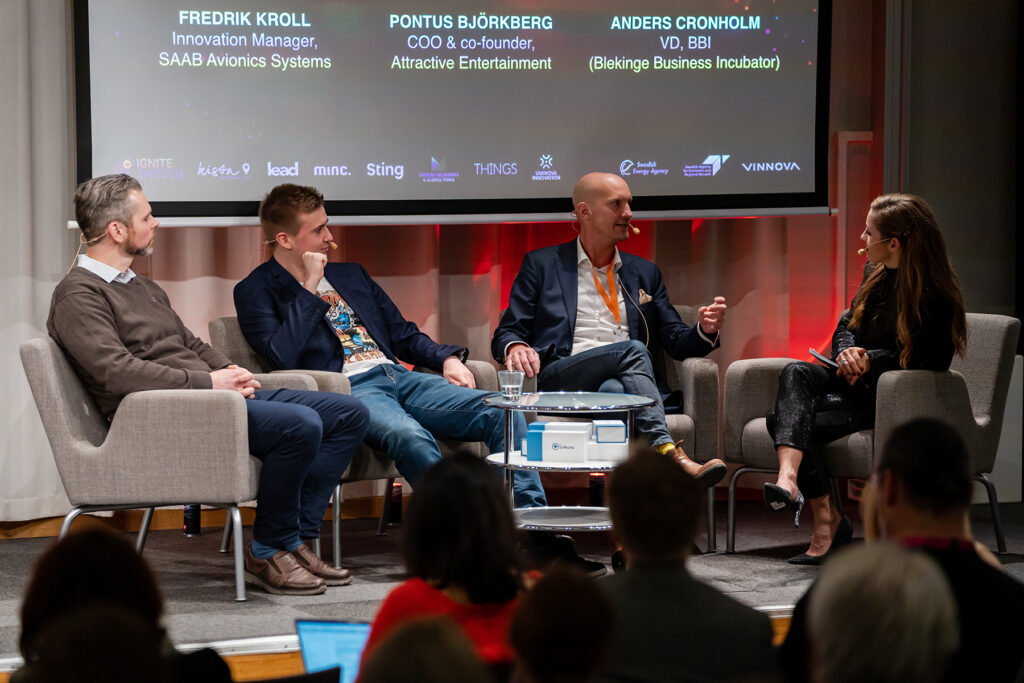
With nearly 20 years of experience leading a regional incubator, Anders Cronholm is now helping shape Ignite Sweden’s international journey as Chair of the board.
From the early days of the Swedish innovation ecosystem to the global ambitions of Ignite Sweden, Anders Cronholm has seen the ecosystem evolve — and helped shape it. Now, he’s bringing that perspective to the recently formed board of Ignite Sweden.
Anders had long been a strong Ignite supporter when he was asked to join the board after Ignite Sweden became an independent entity. “It was an easy yes,” he admits.
From Startup Founder to Ecosystem Builder
Anders’ connection to startups runs deep. After launching his own business right out of university, he joined Blekinge Business Incubator and has remained there for nearly 17 years.
During that time, he has seen firsthand how Sweden’s startup support system has matured. When he launched his own company in the late 1990s, incubators looked very different from what they are today.
“I remember when I entered the incubator for the first time, it was like ‘I have a startup, this is my idea.’ Once a week, you’d go into a room and meet a lawyer, a real estate professional, and maybe an accountant, and you had 30 minutes to ask your questions. That was all the support you got from the incubator back then.”
Turning 20 this year, Blekinge Business Incubator is now one of the most impactful incubators in southern Sweden, having supported over 260 startups that collectively employ more than 300 people in the region — with 70% still operating locally.
Anders emphasizes the shift that’s happened in the ecosystem: “Today’s incubators have processes and models to help you break down your idea and connect to a wider network of investors, founders, and special expertise.”
Creating Unexpected Matches Through a Two-Way Process
Ignite Sweden first caught Anders’ attention when Pär Hedberg, then CEO of the Stockholm-based incubator Sting, pitched it during a SISP – Swedish Incubator and Science Park gathering.
“Pär told us they had a new idea, to create a platform to connect startups with large companies. And I thought, ‘this is a little bit of the Holy Grail.’”
One of Ignite Sweden’s strengths, according to Anders, is its ability to spark startup–corporate collaborations no one saw coming. He points to one standout match between Blekinge Business Incubator startup alumni Attractive Interaction and Saab.
“Saab is in the aerospace business, and Attractive Interaction was a gaming company. How was it possible to match those companies? None of us saw it coming. But it turned out really well. They kept on doing business together with Saab for many years after that initial Ignite meeting.”
He sees this as part of the deeper value Ignite offers and credits its structured process as a key success factor.
“Ignite’s process works in two directions: it prepares the startup for meeting with corporate and public organizations, but it also prepares large companies to meet and collaborate with startups. That’s what creates a way for them to do business together.”
Looking Ahead: Scaling Ignite’s Global Impact
Anders joined the Ignite board with enthusiasm — and took on the Chair role to help guide its next chapter.
“As a chairman, I should be the absolute best support for the CEO. Hopefully I will also be a good chairman — leading the meetings, and making sure everybody gets the chance to speak and does their homework.”
He also brings deep insight into the Swedish incubator system and its unique role in bridging public and private sectors.
“Even though we’re private companies, we operate somewhere in between — privately run but publicly funded. I think it’s important to have someone on the board who understands that structure and its relevance.”
Anders looks forward to contributing to Ignite’s evolution into an international platform.
“It’s exciting to see that we’ve created something within the Swedish incubator system that the world now wants to replicate and they’re asking us for help.”
In three years, he hopes to see Ignite accelerate its growth in Sweden and establish its process internationally, enabling startups to collaborate with established organizations across continents.
“That would be a great story to tell your kids — that you were part of Ignite’s international journey,” he concludes.
Cleantech entrepreneur Isabella Palmgren takes a seat on the Ignite Sweden board to help more Swedish startups connect with potential customers.
This new board role marks a natural next step following years of collaboration with the organization. The partnerships and business opportunities gained through Ignite have played a key role in taking her company global.
“I truly believe in Ignite Sweden as a platform. It’s a faster way for startups to reach decision-makers, customers, and partners — and it actually works. We’ve seen that proven time and again,” says Isabella.
From Pilot to Global Partnership
Mimbly began as a student project at Chalmers University of Technology in Gothenburg in 2017 and has since developed solutions to reduce water usage and microplastic emissions from washing machines — an innovation that has gained international recognition.
But without the right connections, Mimbly’s expansion would have taken much longer.
“Through Ignite Sweden, we met the facility management company Coor in 2018, which is now one of our biggest customers. That meeting might never have happened otherwise.”
During the initial pilot project in 2019, Mimbly tested its main product, the Mimbox, at Coor’s head office in Kista. The Mimbox connects to commercial washing machines and enables both water reuse and microplastic filtration — an innovation designed to conserve resources and protect the environment.
This pilot project was a major turning point in Mimbly’s early-stage startup growth and their ability to validate the product in real environments.
“Since then, we’ve installed products together in several countries and continued to develop the collaboration,” explains Isabella.
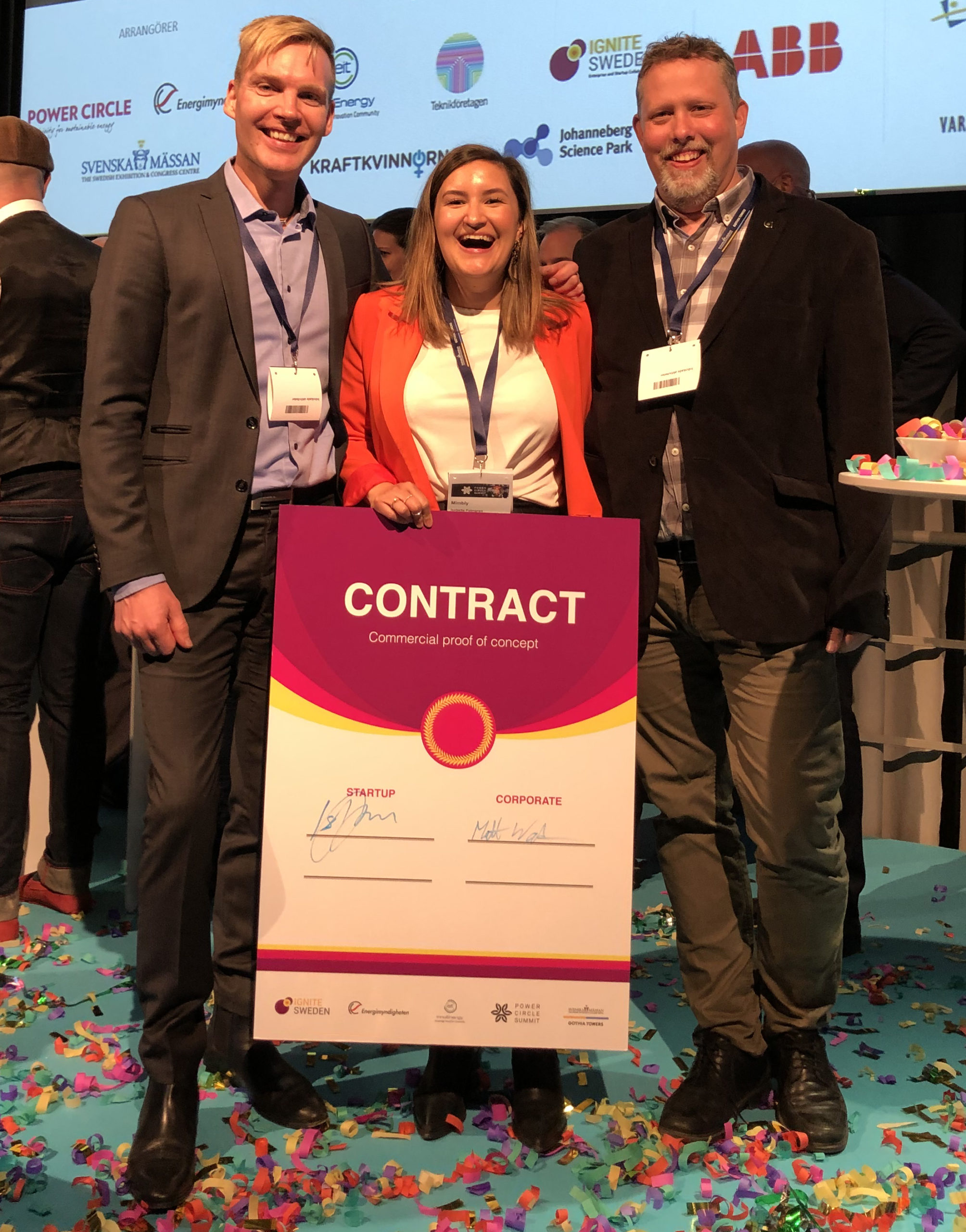
That concrete path to business is what makes Ignite Sweden so crucial for Swedish startups, she believes.
“It’s all about the right match. Ignite facilitates curated meetings where both sides are genuinely eager to connect. That saves a tremendous amount of time for a small company.”
A New Role, A Greater Responsibility
With firsthand experience scaling a cleantech company, Isabella Palmgren brings valuable innovation leadership to Ignite Sweden’s board. She looks forward to contributing her perspective as a startup founder and CEO with a background in both hardware and software development.
“I’ve worked with everything from production and partnerships to distribution and a broad customer base. I started out in a university-linked incubator, so I understand both sides of the table. I hope to contribute as a problem-solver and through my network.”
Mimbly’s CEO describes Ignite Sweden as a bridge-builder between different worlds.
“We’re good at many things in Sweden, but we’re not always the best at connecting large companies with startups. In other countries, people move more freely between roles and may have a better understanding of each other’s motivations.”
A Catalyst for the Entire Ecosystem
Ignite Sweden’s recent transition to an independent company opens up new opportunities, both nationally and internationally.
“I think we’ll see hundreds—maybe thousands—of successful collaborations in the coming years. Real partnerships that lead to business, new companies, even jobs. That ripple effect we’re aiming for, where one collaboration sparks something even bigger.”
Isabella Palmgren sees Ignite as as an essential part of Sweden’s innovation system, particularly for publicly funded actors like incubators and science parks:
“They often focus locally or regionally. Ignite breaks through that – it can connect you with companies from all over the world. Those kinds of connections aren’t always available within a single incubator. We need to collaborate to go further.”
Mimbly’s founder concludes with a vision for the future:
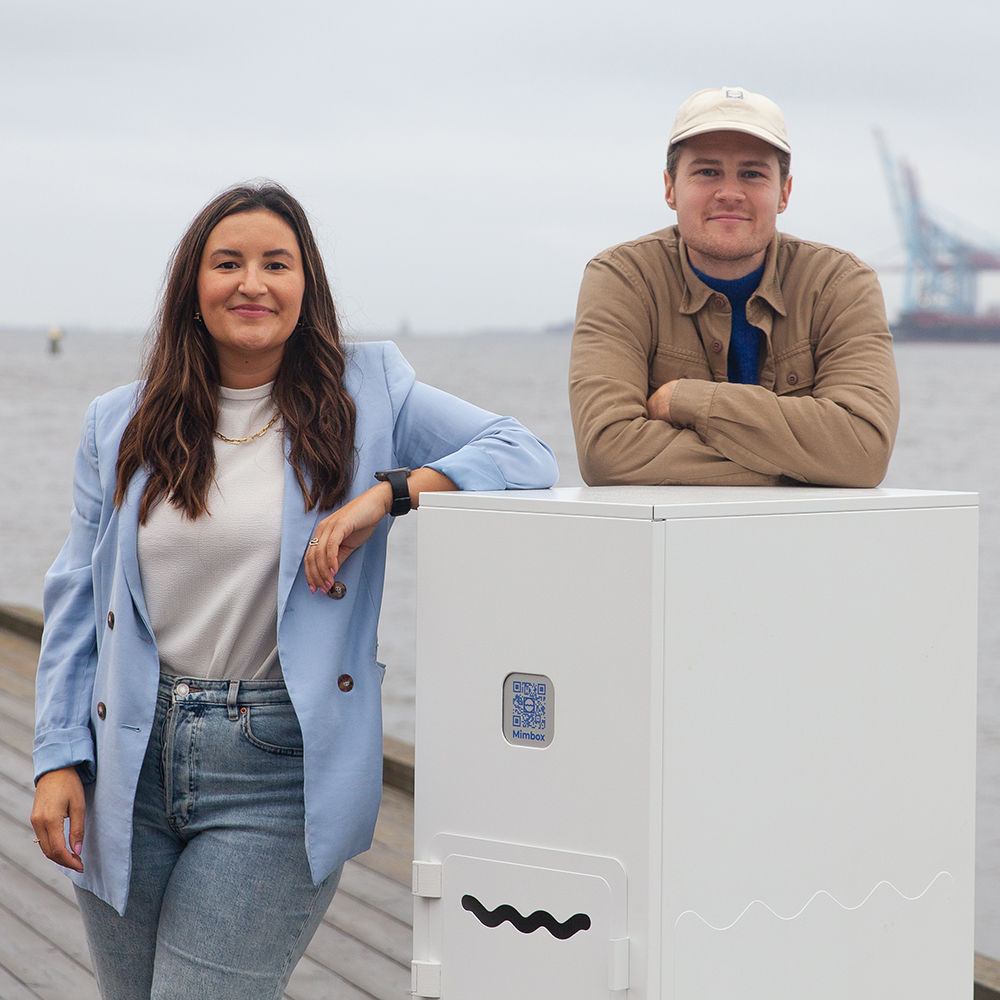
“My hope is that ten years from now, Ignite will be the go-to hub in Sweden’s startup and innovation landscape for connecting with potential customers — independent, cross-border, and full of proof that collaboration drives real results. We need each other, and Ignite is one of the best ways to find the right partners.”