Movexum and Ignite Nordic join forces to help municipalities in Gävleborg work with startups across Sweden to turn local challenges into pilots.
How can municipalities find new expertise and new solutions to complex challenges when the answers aren’t always within their own organization, or even within their region?
That question is a starting point for the collaboration between Movexum and Ignite Nordic within the Entreprenörs- och innovationslyftet (‘Entrepreneurship and Innovation Boost’ in English). Together, the two organizations are testing how local needs among Movexum’s innovation partners can be linked to national expertise, and how the path from challenge to expertise, solution, pilot, and business can be made shorter.
From Individual Efforts to Long-Term Capacity
“Innovation rarely happens within a single organization. It emerges when needs, people, knowledge, and new perspectives come together,” says Marit Finch-Westin, Project Manager Public Sector at Ignite Nordic.
The collaboration is therefore about more than finding solutions to individual problems. It aims to strengthen the ability of municipalities and other organizations to identify needs, engage with the market, and draw on external expertise.
“Individual projects aren’t enough to create lasting impact. We need to build relationships, knowledge, and ways of working that make it easier to move from an identified need to the right expertise, and on to a solution, a pilot, and eventually a business deal or implementation,” says Stina Skoglund, Project Manager at Movexum.
One concrete example is the work with the Municipality of Gävle on local food supply, based on an innovation partnership. Movexum contributes regional presence, relationships, and links to entrepreneurship and startups. Ignite Nordic adds national networks, experience from other municipalities, and expertise in needs-driven innovation and innovation procurement.

The work has contributed to an application for a SustainGov feasibility study that involves an innovative startup. It has also made visible which internal conditions and skills an organization needs in order to work with innovation over the long term.
Startups Bring Expertise That May Be Missing
A key part of the work is changing the perception of what collaborating with startups can mean.
Startups don’t only offer finished products for the public sector to test. They can contribute specialist expertise, new technology, different perspectives, and the ability to quickly develop and adapt solutions to concrete needs.
For a municipality, this can mean access to skills and creativity that don’t exist in-house. By sharing its needs openly and meeting companies with the right expertise, a municipality can explore new solutions together with the market.
Testing and piloting then become a way to put that expertise into practice. The municipality can try a new solution on a small scale and learn what works in its own operations. The startup gains operational knowledge and a real-world setting where its solution can be verified, developed, and adapted.
The Local Doesn’t Have to Solve Everything Locally
The best expertise or solution for a regional need isn’t always found in the region.
Through Ignite Nordic, actors in Gävleborg gain access to a national network of startups, scaleups, and innovation environments, along with experience from other parts of Sweden. Movexum, in turn, brings an understanding of local conditions, identifies needs, and builds the relationships and trust required to move new ways of working forward.
This is where the organizations’ roles complement each other: Movexum links the local level to the national, and Ignite Nordic can bring national expertise, experience, and solutions back to Gävleborg.
From Need to Expertise, Pilot, and Business
One central lesson is that innovation work needs to start with the need, not with a predefined solution.
The ambition is to develop, step by step, a working method that can be reused:

The goal isn’t simply to find a company that already has the exact product requested. Through scouting and matchmaking, a municipality can reach startups and entrepreneurs with specialist knowledge in the relevant area. When a startup’s technical expertise meets a municipality’s operational knowledge, existing solutions can be adapted, new uses can be identified, and in some cases new solutions can be developed.
In the longer term, there is also a clear link to the business climate and regional growth. As organizations get better at articulating needs, engaging with the market, drawing on external expertise, and creating room to test new solutions, demand for innovation becomes more qualified.
That gives innovative companies more opportunities to contribute their expertise, develop their offerings, and win new business. The public sector’s capacity for innovation and the strength of the business community become two parts of the same development.
Relationships Are Part of the Strength
Making this work takes more than methods and processes. It takes trust.
Movexum’s regional presence and relationships are complemented by Ignite Nordic’s national reach.
Together, the organizations can offer reassurance to municipalities and others who want to work with innovation but may lack the resources, experience, or networks to do so alone.
With access to experience, expertise, and solutions already tested elsewhere, each organization doesn’t have to start from scratch. Ways of working, pilots, and lessons learned can be shared and reused, which can reduce risk and shorten the path to change.
“When regional presence meets national networks, new possibilities open up. Municipalities like Gävle get access to more perspectives, more solutions, and more opportunities to turn innovation into real benefits for our residents,” says Eva von Schéele Frid, Business Developer at the Municipality of Gävle.
A Stronger Innovation System Creates More Opportunities
Ultimately, Entreprenörs- och innovationslyftet is about capacity building: strengthening the ability of people and organizations to work with innovation after the project ends.
For Movexum, the work is also a chance to further develop its role as a regional innovation broker: identifying needs and opportunities, and linking municipalities, companies, and academia with entrepreneurs, startups, and national innovation environments.
“By strengthening the link between regional needs and national networks, we can create better conditions for both the organizations with the needs and the startups. Real innovation happens when these perspectives meet,” says Marit Finch-Westin at Ignite Nordic.
The collaboration reflects an important shift: from seeing the innovation system as a collection of organizations to seeing the relationships and links between them as part of its strength.
When municipalities get better at identifying their needs and drawing on external expertise, more opportunities open up for innovative companies. When startups can apply their specialist skills to real challenges, the conditions are set for both innovation and new business.
This strengthens the public sector’s capacity for innovation, as well as the conditions for a more innovative and competitive business community in the Gävleborg region.
Entreprenörs- och innovationslyftet runs until March 2027 and is funded by Region Gävleborg and the European Regional Development Fund. Experiences and lessons from the work will be documented and used to develop ways of working that can continue beyond the end of the project.
Ignite Nordic is partnering with SISP and Ukraine’s largest innovation park, UNIT.City, to develop a new Ukrainian-Swedish approach to collaboration between municipalities and startups.
Sweden-Ukraine GovTech Alliance for Resilience and Rebuildning (SUGARR) is a six-month Ukrainian-Swedish cooperation project focused on municipal innovation governance and the role startups can play in addressing public sector challenges. The project is funded by the Swedish Institute through the Ukraine Cooperation Programme 2026.
“The Swedish Institute funds collaboration between Swedish and Ukrainian organizations and individuals. Through on-the-ground projects and educational initiatives, we contribute to Ukraine’s reconstruction and closer integration with the European Union, while also strengthening resilience in both Ukraine and Sweden,” says Madeleine Sjöstedt, Director-General of the Swedish Institute..
At the heart of the initiative is a shared ambition: to lay the foundations for long-term Ukrainian-Swedish cooperation on public sector innovation. By combining the strengths and experience of both innovation ecosystems, the partners will explore how structured startup collaboration can contribute to more resilient, transparent and effective public sector innovation in Ukraine, while supporting the country’s reconstruction and continued alignment with the European Union.
“In Sweden, startup collaboration is a proven driver of innovation in municipalities and the wider public sector. Together with our partners, we want to develop a shared Ukrainian-Swedish model for faster, more effective public sector innovation,” says Vanessa Ware, Head of Public and System Innovation at Ignite Nordic.
From Mapping to a Long-Term Cooperation Model
Starting this September and running through February 28, 2027, the project serves as a preparation phase for a potential long-term cooperation between Sweden and Ukraine.
The work starts with UNIT.City mapping Ukraine’s innovation ecosystem and examining how municipalities and startups currently interact. This includes gathering perspectives from Ukrainian tech companies as well as public sector actors to identify barriers and opportunities related to startup collaboration, pilot processes and innovation procurement.
The Ukrainian and Swedish partners will then benchmark these findings against Swedish practices. A study visit to Sweden hosted by SISP – Swedish Incubators & Science Parks will bring Ukrainian actors together with Swedish incubators, science parks and municipal innovation environments, followed by bilateral workshops facilitated by Ignite Nordic.
The partners will use the findings to jointly develop an analytical report, a draft cooperation framework for municipal innovation and a roadmap for a potential full-scale Ukrainian-Swedish collaboration. The goal is to build the evidence, relationships and structures needed to test and scale the model in a future project.
Learning From Each Other
The partnership is built around mutual learning. Sweden has extensive experience with structured innovation support, incubation, public sector collaboration and mechanisms for engaging startups around concrete public needs, while Ukraine has implemented numerous GovTech programs and demonstrated an extraordinary capacity to innovate rapidly and adapt under highly challenging conditions.
“By combining Swedish public sector experience of systematically using startup collaboration as an innovation method within established policy and regulatory frameworks with Ukrainian government experience of rapid adaptation under extreme conditions, we can jointly learn, test and develop more resilient and effective approaches to public sector innovation,” says Vanessa.
For both countries, the project creates an opportunity to examine what works, what can be transferred and what needs to be adapted to different institutional realities.
“Ukraine’s innovation ecosystem has proven it can operate under conditions no one designed it for. What we want to develop further is the institutional layer that turns that capacity into systematic cooperation between municipalities and startups. Reconstruction makes this urgent: every rebuilt service, network and public system is a decision about how our regions will operate in the future,” says Diana Maslianchuk, International Partnerships Manager, UNIT.City.
“This project gives us the chance to study how Sweden structures that relationship, which parts are transferable and which are not. We expect to develop a realistic framework and to learn good practices that can be applied in Ukraine.”
For Sweden, the collaboration also provides an opportunity to learn from Ukrainian approaches to innovation, resilience and rapid implementation.

“In troubled times, fast and smart innovation becomes even more important, especially for government agencies. We are very happy to be able to take part in a project where Sweden, as an innovation powerhouse, can learn from, support and co-develop with an ally like Ukraine, which has shown excellent flexibility and speed in times of hardship,” says Jonas Michanek, VP Incubation at Swedish Incubators & Science Parks (SISP).
Public Sector Innovation as a Tool for Resilience
For Ukraine, strengthening the mechanisms through which municipalities can work with innovative companies has implications far beyond individual innovation projects.
“The public sector is where innovation either improves people’s lives or stops. A city procures transport, heating, healthcare access, digital services — decisions that shape daily life for thousands of people. Ukraine has already shown what happens when the state innovates seriously: our digital public services keep running through blackouts and massive attacks. Public sector innovation is not a modernization project. For us, it is a question of resilience,” says Diana Maslianchuk.
“We look forward to learning from Ukraine while bringing the Ignite Nordic model and years of experience in turning public sector challenges into concrete collaborations with startups. By combining our different experiences, we can build something that is relevant to both Ukraine and Sweden’s context and valuable beyond this project,” concludes Vanessa Ware.
Following its launch in Norway earlier this year, Ignite Nordic is taking another step in its regional expansion with its establishment in Iceland. Led locally by Drift EA, the initiative will connect Icelandic startups with companies and public organizations, creating new opportunities for commercial collaboration and innovation.
Iceland becomes the third country where Ignite Nordic operates, following Sweden and Norway.
The launch follows Ignite Nordic’s establishment in Norway in January and represents another milestone in the organization’s development from a Swedish initiative into a Nordic platform for commercial collaboration between startups and established organizations.
“When we became Ignite Nordic earlier this year, our ambition was to create more business opportunities for startups across the Nordics. Our expansion allows us to open doors to many more potential customers and new markets – first in Norway and now in Iceland. At the same time, startups in each of our markets gain corresponding opportunities across the region. That is exactly what we want to build: a Nordic structure where startups do not have to start from scratch in every new country, but can use Ignite as a pathway to relevant customers across borders,” says Sara Hamlin, CEO of Ignite Nordic.
A Nordic Model, Shaped Locally
Ignite Nordic’s model is built on a strong local presence in each country with shared ways of working, processes and access to a Nordic network. The aim is to combine strong local ecosystems with opportunities for collaboration across borders.
For startups, this means not only gaining new pathways to potential customers at home, but also opportunities to engage with organizations across the Nordics.
“There is enormous untapped potential in connecting the Nordic innovation ecosystems more closely. When we share relationships, knowledge and opportunities across borders, we are not only helping startups access a larger market, we are strengthening the Nordic region’s ability to innovate together. I believe that is where we can create real impact,” says Maria Olofsson, VP Ecosystem at Ignite Nordic.
In Iceland, Drift EA will lead the establishment and local operations, adapting Ignite Nordic’s methodology and processes to the Icelandic context while connecting the country to the broader Nordic platform. Sigmar Sigurðarson will lead Ignite Nordic’s work in Iceland.
“With Ignite Nordic in Iceland, we want to create a focused platform where companies and entrepreneurs can find each other and build partnerships that lead to growth and innovation,” says Sesselja Barðdal Reynisdóttir, Managing Director of Drift EA.

Rooted in the Icelandic Innovation Ecosystem
As in Sweden and Norway, Ignite Nordic in Iceland is being developed in close collaboration with local innovation actors.
The initiative is backed by a diverse group of Founding Partners representing different parts of the Icelandic innovation ecosystem: Drift EA, the Association of Municipalities in Northeast Iceland (SSNE), West Iceland Regional Office (SSV), the University Association of South Iceland (HFSU), KLAK – Icelandic Startups, Iceland Ocean Cluster, IceBAN – Icelandic Business Angels, and Fjársýslan – Financial Management Authority.
“Iceland has a wealth of ingenuity and strong entrepreneurs across the country. However, one of the biggest challenges is often creating connections between those developing new solutions and those who can put them to use. Ignite Nordic is a step toward shortening that path, strengthening collaboration, and creating new opportunities for value creation,” says Logi Einarsson, Iceland’s Minister of Culture, Innovation and Higher Education.
The establishment of Ignite Nordic in Iceland is funded by the Ministry of Culture, Innovation and Higher Education, Drift EA, West Iceland Regional Office (SSV), the Association of Municipalities in Northeast Iceland (SSNE), and the University Association of South Iceland (HFSU).
Ignite Nordic is now open to startups and established organizations from across Iceland and all sectors. Starting this September, Icelandic startups will be able to meet potential customers, while established organizations in Iceland will have opportunities to engage with Icelandic, Swedish and Norwegian startups and explore commercial collaborations.
About Ignite Nordic
Ignite Nordic is a non-profit organization that creates business opportunities for startups through collaboration with large companies and public sector organizations.
Since 2017, Ignite Nordic has developed a structured and quality-assured process for matching startup solutions with concrete innovation needs. To date, Ignite Nordic has connected more than 2,000 startups with over 460 established organizations, resulting in more than 780 commercial collaborations.
Ignite Nordic operates in Sweden, Norway and Iceland and is continuing its expansion across the Nordic region.
For More Information
Sara Hamlin
CEO, Ignite Nordic
sara@ignitenordic.org
Sesselja Barðdal Reynisdóttir
Managing Director, Drift EA
sesselja@driftea.is
The Nordic GovTech Alliance laid the foundation for stronger collaboration between the public sector, innovation ecosystems, and startups across the region.
“The Nordics are too small not to collaborate.” For Niklas Sikström, Project Manager at Ignite Nordic, that simple statement captures why the Nordic GovTech Alliance was created in the first place, and why its work is only just beginning.
Almost two years ago, Ignite Nordic, Fjársýsla (the Financial Management Authority of Iceland), and Business Finland, supported by VTT (Technical Research Centre of Finland), came together around a shared observation: despite differences in procurement systems and organizational structures, public organizations across the Nordics face similar challenges. An aging population, increasing pressure on healthcare systems, climate adaptation, civil preparedness, resilience, and the energy transition are challenges no country can solve alone.
Funded by the Nordic Council and supported by Vinnova, the Nordic GovTech Alliance was launched as a preparatory project to explore whether the Nordics could develop a shared approach to identifying, testing, and procuring innovative startup solutions.
“The Nordics face mutual societal challenges that are heavily dependent on successful public sector disruption in service delivery and operating efficiency. To facilitate this change, we must rely on true international cooperation and commitment to deploy effective solutions, and Ignite Nordic is well suited to lead us there,” says Sveinbjörn Ingi Grímsson, from the Financial Management Authority of Iceland.
Breaking Down Barriers to Public Innovation
Throughout the project, participants repeatedly returned to the same conclusion: innovation is rarely limited by the availability of technology. Instead, the biggest barriers are organizational.
The Nordic Govtech Alliance project conferences held in 2025 alongside Iceland Innovation Week, Uppsala Innovation Night, and Slush highlighted the importance of involving procurement teams early, defining needs before searching for solutions, building trust between stakeholders, and committing to implementation before launching pilots.
Participants included representatives from the municipalities of Helsinki, Espoo, Uppsala, and Norrköping, HUS Helsinki University Hospital, Senate Properties, Landspítali University Hospital, HBV, Maria 01, Demola, Health360, KLAK, and Drift, among other organizations from across the Nordics.
Shared Challenges Require Shared Solutions
Over the course of the project, several approaches were developed and tested, together forming a scalable model for public innovation. These included a common process for helping public organizations discover and procure innovative startup solutions, international workshops bringing together public need owners from across the Nordics, curated matchmaking sessions between public organizations and startups, and a multi-stakeholder needs assessment methodology designed around shared societal challenges.
One of these challenges became the focus of the project’s final workshop in Helsinki, centered on how to enhance quality of life and prolong independent living at home for senior citizens.
Before looking for specific solutions within a single organization or country, the participants worked together to map common needs and explore how startup collaboration could help address them.
The workshop confirmed something the project had already begun to demonstrate: the similarities between Nordic public organizations are far greater than the differences.
As Niklas Sikström summarizes: “We moved from ‘We must do something to make it easier for Nordic public organizations to jointly explore and procure innovative startup solutions’ to ‘This is how we can make it happen.'”
Turning Conversations Into Collaboration
Beyond developing methods and testing new ways of working, the project also led to concrete collaborations between public organizations and startups.
Throughout the project, public organizations —including the Swedish municipalities of Uppsala and Norrköping, and Region Dalarna— were matched with more than 35 Nordic startups and scaleups. Many of the curated matchmaking meetings continued beyond the initial conversations, resulting in seven startup collaborations.
Region Dalarna was looking for a way to optimize stock management and ordering of low-cost medical supplies. The solution they needed was not readily available through existing procurement channels, and the region lacked access to companies working on this type of technology.
The region was matched with relevant startups through Ignite Nordic’s curated matchmaking process. The dialogue continued after the initial meetings, eventually leading to Proof of Concept projects with two companies.
One of them is Sensative, whose hardware and software are now being tested in a pilot project to determine whether they can improve inventory management across the region. If successful, the solution has the potential to scale not only within Region Dalarna but also to other regions facing the same challenge.
For Oskar Baggens-Callenås, Process Owner Logistics at Region Dalarna, the value of the collaboration went far beyond finding potential suppliers: “Without Ignite Nordic’s support and extensive network, the region would most likely still have been struggling to figure out how to move the challenge forward. The professional matchmaking process, with its clear structure, well-prepared presentations, and carefully selected companies, has significantly facilitated the process and enabled Region Dalarna to continue developing its ideas for more efficiently monitoring and managing the consumption of its supplies.”
A Scalable Model for Public Innovation
Through nearly two years of testing, the alliance has demonstrated that public organizations across the Nordics share enough common challenges to call for a coordinated approach to identifying needs, scouting startups, testing solutions, and scaling successful innovations across borders.
“The Nordic GovTech Alliance has given us at Ignite Nordic valuable partners and a much deeper understanding of the needs within the Nordic public sector. Although each country has its own way of organizing public services, the similarities are much greater than the differences. It has also shown that Ignite Nordic’s way of working with public sector challenges works remarkably well across borders,” says Niklas Sikström.
The first phase of the Nordic GovTech Alliance has recently concluded, but the work is far from over. The project’s partners are now exploring how to expand the initiative by welcoming additional ecosystem partners, public organizations, stakeholders, and funders. Organizations in Denmark and the Baltics have also expressed interest in joining the Nordic GovTech Alliance.
If you are also interested in shaping the next chapter of the Nordic GovTech Alliance, please contact Project Manager Niklas Sikström at niklas@ignitenordic.org.
The podcast explores innovation, transformation, and how people and organizations create change together.
Change is rarely limited by a lack of ideas or technology. More often, it is limited by our ability to work differently, collaborate across boundaries, and turn ambition into action.
Inställning till Omställning explores what it takes to create real transformation – in organisations, industries, and society. Through conversations with people working at the forefront of innovation and change, we examine the mindsets, collaborations, and decisions that help turn challenges into progress.
Hosted by Maria Olofsson, VP Ecosystem at Ignite Nordic, the new podcast is produced by Ignite Nordic and Uminova Innovation within the project Innovationspiloter för omställning.
The podcast is available on Spotify, Apple Podcasts, Amazon Music, and Podplay.
The Story of a Collaboration
The first five episodes we launch today focus on a common question: what does it take for startups and municipalities to successfully create change together?
Together, these episodes tell the story behind Digitala Seniortorget (Digital Senior Center), a collaboration between a startup (Umigotech), a municipality (Umeå), and the innovation ecosystem supporting them (Uminova Innovation and Ignite Nordic). The result is a practical example of how new forms of collaboration can improve quality of life while creating scalable solutions for public sector challenges.
Episode 1: Why Are Some Better at Adapting Than Others?
In the opening episode, host Maria Olofsson introduces the question that inspired the podcast. Drawing on nearly 17 years in the innovation ecosystem, she reflects on why transformation often stalls despite the availability of technology and solutions. The episode introduces the concept of system innovation and the importance of shared goals across sectors.
Listen here
Episode 2: Opening Up a Municipality from Within
Ellen Grahn, Innovation Manager at the Municipality of Umeå, shares her experiences creating space for innovation inside a large public organization. The conversation explores shared leadership, curiosity as a workplace culture, and how municipalities can enable experimentation by working with startups rather than trying to solve every challenge internally.
Listen here
Episode 3: Asking the Right Questions
Camilla Jägerving Isaksson, Development Strategist at Umeå Municipality’s Elderly Care Administration, discusses how changing a single question can transform an entire organization’s direction. Instead of focusing on reducing care needs, her team began asking what older citizens need to live good and independent lives—and the results followed.
Listen here
Episode 4: The Human Side of Innovation
Richard Larsson from Uminova Innovation explores one of the biggest barriers to public-private innovation: people. While technology is rarely the problem, organizations built around stability often struggle to collaborate with startups built for speed and experimentation. The episode examines what both sides need to make collaboration work.
Listen here
Episode 5: Building Digital Infrastructure for Society
Researcher and entrepreneur Per Levén, founder of Umigotech, shares the story behind Digitala Seniortorget. He argues that municipalities need to take ownership of critical digital infrastructure in the same way they own roads and water systems. The conversation highlights the growing role of GovTech in enabling long-term societal transformation.
Listen here
Ignite Nordic has taken the next step in its expansion by welcoming seven innovation hubs, strengthening the initiative’s ability to connect startups with corporates and public organizations across the Nordics.
The organizations joining the initiative are 6AM, Impact Startup, K2 Gründerlab, Nordic Edge, Smart Innovation Norway, Validé, y VIS – Vestlandets Innovasjonsselskap.
The ecosystem actors represent a broad geographic and sectoral reach across Norway, spanning areas such as energy, health, digitalization, sustainability, marine innovation, smart cities, and impact entrepreneurship, helping Ignite Nordic establish a national presence from the beginning.
“We have brought on board seven strong innovation environments with good geographic distribution from the start, and we plan to build this in the same way Ignite started in Sweden, where it was established by seven leading incubators and has since grown to include all Swedish incubators,” says Gustav Gorecki, Managing Director of David & Goliath Ventures, the organization leading Ignite Nordic’s establishment in Norway.
“To build a strong and lasting startup collaboration platform in Norway, it is essential to work together with trusted local innovation actors who understand their regional ecosystems, industries, and entrepreneurs. The organizations joining as founding ecosystem partners combine deep local networks with strong capabilities in commercialization and innovation support, making them ideal partners for establishing Ignite Nordic nationally from day one,” says Maria Olofsson, VP Ecosystems at Ignite Nordic.
First Norwegian Startups Already Matched with Corporates
Since the launch in January, Ignite Nordic has already begun facilitating matchmaking processes between Norwegian startups and established organizations.
In late April, eight Norwegian startups participated in their first matchmaking meetings with corporates, with additional startups and established organizations from Norway expected to join upcoming matchmaking activities throughout the year.
The ecosystem partners will contribute to identifying promising startups, preparing them for corporate meetings, supporting post-meeting follow-up, and strengthening connections between local innovation ecosystems and national and international business opportunities.
“The founding partners already provide strong support to startups through incubation, business development, and regional ecosystem building. With Ignite Nordic, startups gain an additional pathway to customers, pilots, and commercial collaborations that can help them scale faster. At the same time, the role of the ecosystem partners remains crucial. Their close relationships with the startups and their ability to support them throughout customer dialogues and collaboration processes are key to creating successful long-term outcomes,” says Maria Olofsson.
“Ignite Nordic is an important complement to our incubation work. It increases the commercialization power of the portfolio and gives startups faster access to relevant customers and markets, both nationally and across the Nordics,” says Mikael Melitshenko, COO and Head of Venture at Smart Innovation Norway.
Strengthening Startup Commercialization Through Ecosystem Collaboration
The establishment in Norway follows Ignite Nordic’s broader ambition to strengthen startup collaboration and commercialization across the region through closer cooperation between incubators, startups, corporates, and the public sector.
“When Norwegian companies succeed with innovation, we strengthen both the competitiveness and the ability to adapt across the entire business sector. That’s why we are joining this collaboration: because we believe in the Ignite model and in our partner’s ability to operationalize it in Norway,” says Terje Eide, CEO of Nordic Edge.
The organizations highlight commercialization and structured collaboration as key reasons for joining.
“The most important thing for an early-stage startup is securing its first real customer. Ignite Nordic has shown that structured matchmaking between concrete needs from established organizations and solutions from startups delivers results,” says Runar Brøvig, Incubator Manager at K2 Gründerlab.
The partnership is also expected to strengthen connections between startups and industry across different regions of Norway, while creating new opportunities for pilot projects, commercial partnerships, and long-term business relationships.
“Through this partnership, we can connect companies more closely with relevant industries and create more concrete opportunities for piloting, partnerships, and growth,” says Marianne Ø. Olsen, Head of StartupTRD at 6AM.
These are our Norwegian Founding Ecosystem Partners
6AM
Location: Trondheim
6AM supports tech founders through acceleration, investment, and ecosystem building while helping startups establish strong foundations for growth.
Impact Startup
Location: Oslo
Impact Startup supports entrepreneurs working to solve societal and environmental challenges through impact-driven innovation and ecosystem support.
K2 Gründerlab
Location: Kristiansand & Grimstad
K2 Gründerlab supports innovation and entrepreneurship by helping startups develop sustainable businesses that drive growth and regional development.
Nordic Edge
Location: Stavanger
Nordic Edge accelerates innovation in smart city and agritech through clusters, projects, events, and cross-sector collaboration.
Smart Innovation Norway
Location: Halden
Smart Innovation Norway is a research and innovation company focused on sustainable energy, applied artificial intelligence, smart cities, and digital entrepreneurship.
Validé
Location: Stavanger
Validé supports early-stage startups and research-based innovation in areas such as energy, health, digitalization, and sustainability by helping transform ideas into scalable businesses.
VIS – Vestlandets Innovasjonsselskap
Location: Bergen
VIS supports innovation and entrepreneurship by helping researchers and startups turn ideas into sustainable businesses across areas such as energy, health, marine, and digitalization.
Reach for Change and Ignite Nordic, with the support of JPMorganChase, are today launching a three-year partnership to support underserved entrepreneurs and advocate for systemic change on a broad front.
The initiative, called “Step Up”, enables direct support to 60 entrepreneurs ready to scale through a new accelerator program, and addresses structural barriers that underserved entrepreneurs face when it comes to access to knowledge, contacts, capital and customers.
The collaboration brings together Reach for Change’s 15 years of experience in supporting social entrepreneurs to grow, with Ignite Nordic’s expertise in connecting entrepreneurs with large companies and public organizations, and is enabled by JPMorganChase’s philanthropic support which contributes to a stronger society through investing in local communities.
Society is facing urgent challenges. Meanwhile, underserved entrepreneurs rooted in affected grassroot communities with a deep first-hand understanding of the challenges are developing innovative and scalable solutions that address local needs and offer employment opportunities. Due to structural barriers these entrepreneurs face significant challenges to grow. This is a loss not only for the entrepreneurs, but for society as a whole. This partnership aims to create a more inclusive, equitable Swedish innovation ecosystem where underserved entrepreneurs scale their ventures, create jobs and uplift communities.
Over three phases, 60 growth entrepreneurs will deep dive in scaling through tailored self paced learning, a buddy system, investor meetings, expert workshops and demo days. At the same time, Ignite Nordic will facilitate connections between entrepreneurs and potential customers in both private and public sectors, accelerating opportunities for collaboration and business growth. This will also open doors to new and innovative financing models.
“Based on our more than 15 years of experience, we know that entrepreneurs need connections and coaching to successfully scale solutions that can have a positive impact on society. I am so excited that we will be able to support entrepreneurs on this journey and that we are joining forces with two strong partners to be able to give these entrepreneurs access to rooms and experiences they have not had before,” says Sofia Breitholtz, CEO Reach for Change.
“If we want new solutions to society’s toughest challenges, we need to make sure the right entrepreneurs get a real shot. This partnership is about turning potential into impact and real business – by connecting entrepreneurs to customers and collaborations they have historically had limited access to,” says Maria Olofsson, Vice President Ignite Nordic.
“Sweden is widely recognised as a leader in innovation, and supporting innovative businesses seeking to scale up is critical to driving economic growth. By backing founders who have historically faced barriers to growth, we aim to strengthen a more inclusive innovation economy—one where opportunity is broader, businesses can thrive, and communities benefit from sustainable job creation. We look forward to this new initiative led by Reach for Change and Ignite Nordic to contribute to a more inclusive innovation ecosystem in Sweden,” says Jonas Wikmark, Co-Senior Country Officer & Co-Head Investment Banking, Nordic region, JPMorganChase.
Step Up open for applications on April 29 through Reach for Change Sweden’s website. The last day to apply is June 10. The program starts in August 2026.
Want to be the first to know when applications for the program open? Sign up here.
For more information contact:
- Julia Rex, Project and Communications Manager, Reach for Change, julia.rex@reachforchange.org / +46 73 926 04 93
- Maria Olofsson, Ignite Nordic, VP Ecosystem, maria@ignitenordic.org / +46 70 419 11 88
- Luisa de Simone, Global Philanthropy, EMEA, luisa.desimone@jpmchase.com
About Reach for Change
Reach for Change is a global non-profit organization that empowers social entrepreneurs with the skills, networks and funding they need to achieve their full potential. Founded in Sweden in 2010, Reach for Change has supported 3.000 entrepreneurs in 18 countries, reaching 5 million children and young people.
About JPMorganChase
For more than 225 years, JPMorganChase has championed the essential role of banking in communities. Supporting global and local economies by delivering value for our shareholders and investing in the progress of our clients and our employees. Our firm is only as strong as the communities we serve, and we are dedicated to creating opportunities for financial growth worldwide.
About Ignite Nordic
Ignite Nordic is a non-profit organization that aims to foster innovation and accelerate commercialization by connecting startups to large companies and public organizations. Since its inception in 2017, Ignite Nordic has connected over 1,900 startups with 450+ established organizations from both the private and the public sector, resulting in more than 788 collaborations and business opportunities.
The new name reflects a broader step in our development, from a national initiative to a unified Nordic platform for startup collaboration.
After nearly a decade of enabling strategic collaboration between Swedish startups and established organizations, Ignite Sweden becomes Ignite Nordic.
“This is a natural next step in our development. Our new name reflects how Ignite has evolved from a national initiative into a shared Nordic platform,” says CEO Sara Hamlin.
The shift strengthens Ignite Nordic’s position both within the region and internationally, offering a unified platform for startup collaboration to partners, stakeholders, and global actors engaging with the Nordic innovation ecosystem.
Scaling a Startup Collaboration Model That Works
Since 2017, Ignite Nordic has focused on one core mission: creating real business opportunities for startups by connecting them with B2B and B2G customers.
Through a structured and quality-assured process developed by Ignite, in collaboration with leading Swedish incubators, the organization has enabled more than 780 concrete business collaborations between startups, corporates, and public sector organizations.
Today, Ignite Nordic operates in Sweden as a subsidiary of SISP – Swedish Incubators & Science Parks, working alongside more than 40 ecosystem hubs across the country, with funding from Vinnova – Sweden’s Innovation Agency.
The platform is also active in Norway, following its launch earlier this year in partnership with David & Goliath Ventures, supported by funding from Innovation Norway and with six innovation hubs as founding partners. Ignite Nordic is now preparing to establish operations in additional Nordic countries.
“We have built a model in Sweden that creates real outcomes by structuring how startups and organizations meet and collaborate,” says Sara Hamlin. “Our focus is now on building on what has already proven to work and extending it to a broader Nordic context.”
An Entry Point to Startup Innovation in the Nordics
With the shift to Ignite Nordic, the organization takes on a broader role: enabling collaboration across borders through a shared startup collaboration model. The ambition is to establish Ignite Nordic as a clear entry point to startup innovation in the region, making it easier for startups, organizations, and partners to connect, collaborate, and scale beyond their home markets.
“Across the Nordics, startups, corporates, and public organizations face similar challenges and share similar needs. This new phase responds to that demand,” says Sara Hamlin. “Ignite Nordic brings them together under one platform, one methodology, and one way of working, but applied to each local context, while ensuring consistency across the region.”
For startups, this means access to a broader market and new customer opportunities beyond their home country. For corporates and public sector organizations, it enables engagement with relevant startup solutions from across the Nordics through a structured and trusted process.
“Ignite has always been about making startup collaboration possible in practice. With Ignite Nordic, we are creating the conditions for that to happen at a regional scale,” concludes Sara Hamlin.
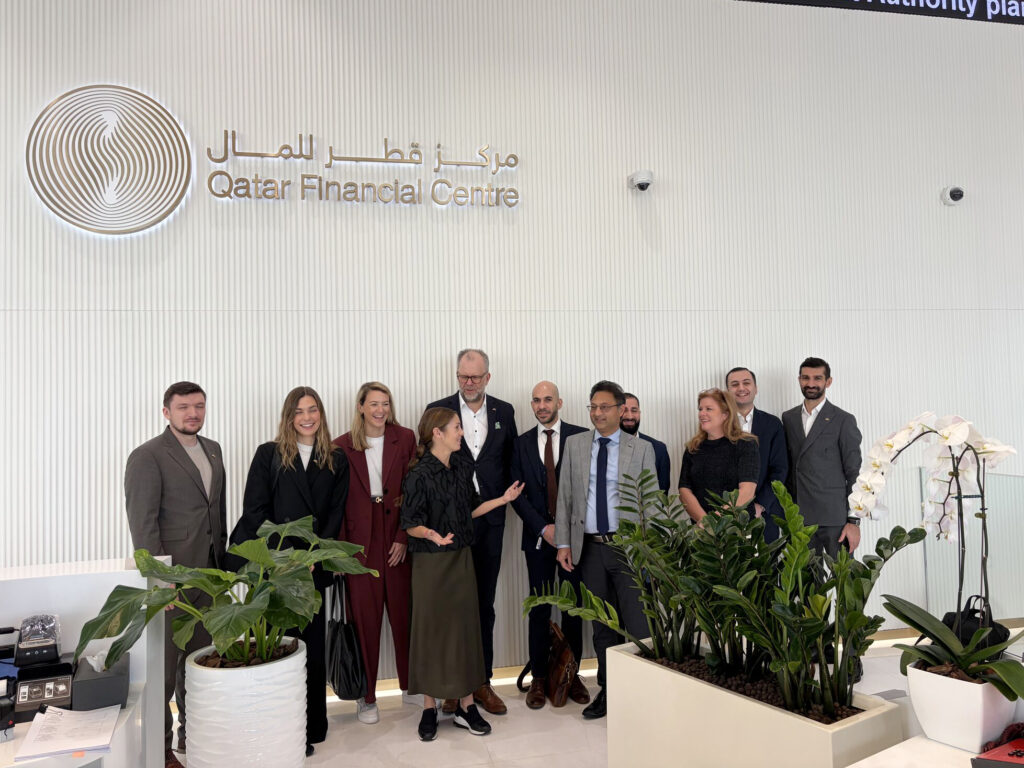
For the third year in a row, Ignite and SISP – Swedish Incubators & Science Parks – brought a Swedish delegation of deeptech startups, investors, and ecosystem representatives to Web Summit Qatar, all with a shared objective: to connect Swedish innovation with concrete opportunities in Qatar and the wider MENA region.
What began four years ago as an exploration of collaboration has now evolved into a long-term, business-driven partnership between the Swedish and Qatari innovation ecosystems.
“Through Ignite Sweden and SISP, we are connected to the entire Swedish innovation ecosystem, including more than 60 incubators and science parks across the country, and we need to find the right markets for their startups. That’s why collaborating with different countries is crucial,” said Maria Olofsson, VP Ecosystems at Ignite Sweden and one of the organizers of the delegation. “Qatar is particularly interesting, as it aligns with our priority areas and offers an excellent platform for collaboration.”
Qatar is today one of the fastest-growing innovation markets globally, with strong public investment and a clear ambition to become a gateway to the Gulf Cooperation Council and the wider MENA region. With a growing focus on AI, sustainability, energy, mobility and healthtech, the alignment with Sweden’s strengths is evident.
A Record Delegation Building Real Traction
From life science to transport, logistics, energy and AI, the breadth of the Swedish delegation reflected the maturity of the collaboration.
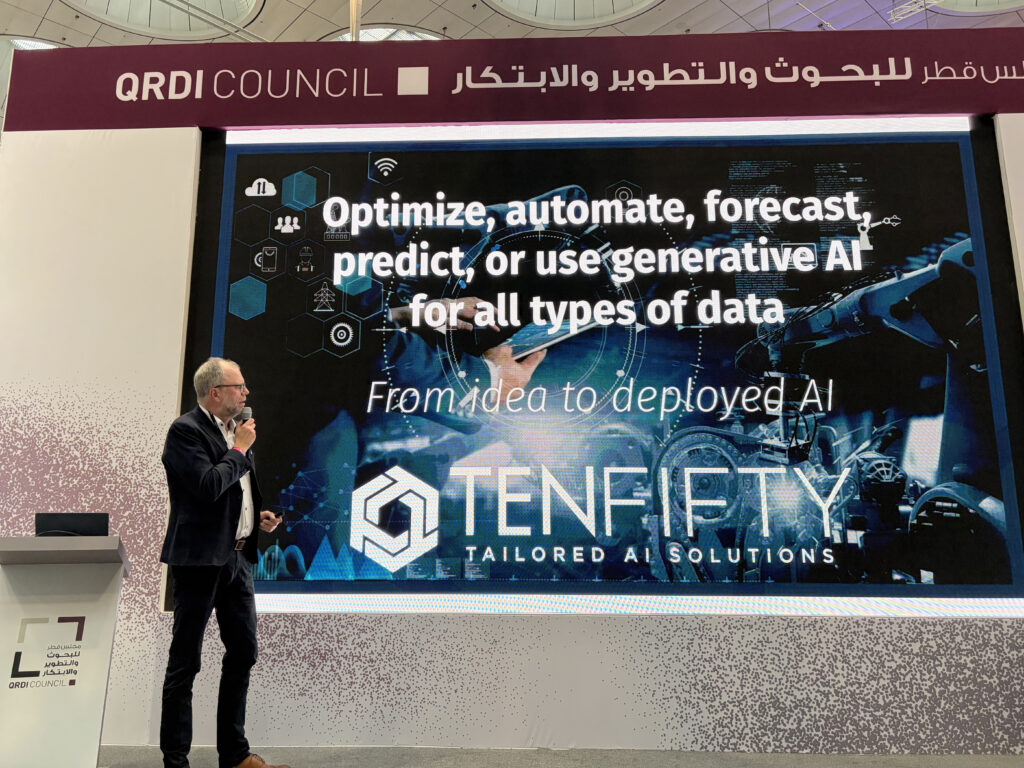
The 2026 delegation brought together nine cutting-edge Swedish startups and scaleups: Anocca, Elonroad, Flasheye, Flowity, Spritju, Tenfifty, Viscando, Viviotex, and XENSE Vision. The group was further strengthened by investor and corporate venture capital representatives from Bling Capital and Scania Group Ventures & New Business, as well as ecosystem representation from Science Park Gotland.
The delegation was co-organized by Maria Olofsson from Ignite Sweden and Sasan Shaba, VP Philanthropy and International Cooperation at SISP – Swedish Incubators & Science Parks.
H.E. Gautam S. Bhattacharyya, Ambassador of Sweden to the State of Qatar, underlined the progress made over the years:
“The traction we are seeing this year is unprecedented. If we compare it to the first year, we were still fairly new and trying to understand the system. I can see that the discussions this year are much more practical, down to earth and to the point, which is really encouraging.”
“It’s really important to show up every year,” Maria said in an interview with the Doha-based newspaper The Peninsula. “Relationships are built over time, and each year strengthens them. This year, we already have strong foundations, and that can lead to even more fruitful collaborations.”
Relationships First, Business Follows
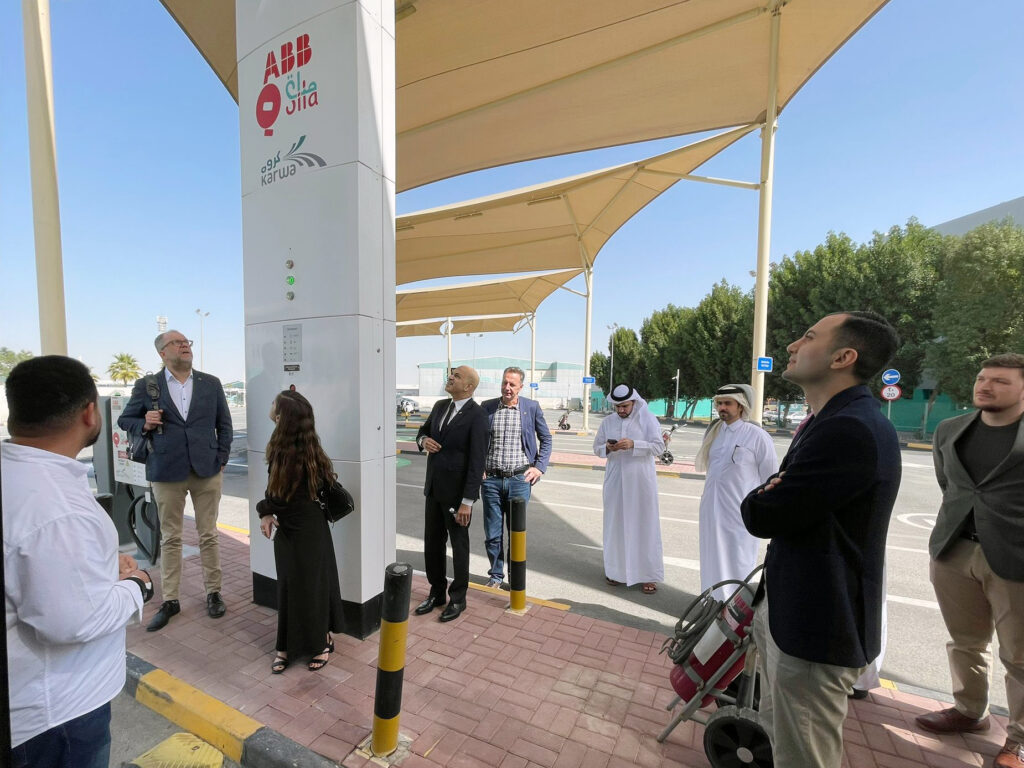
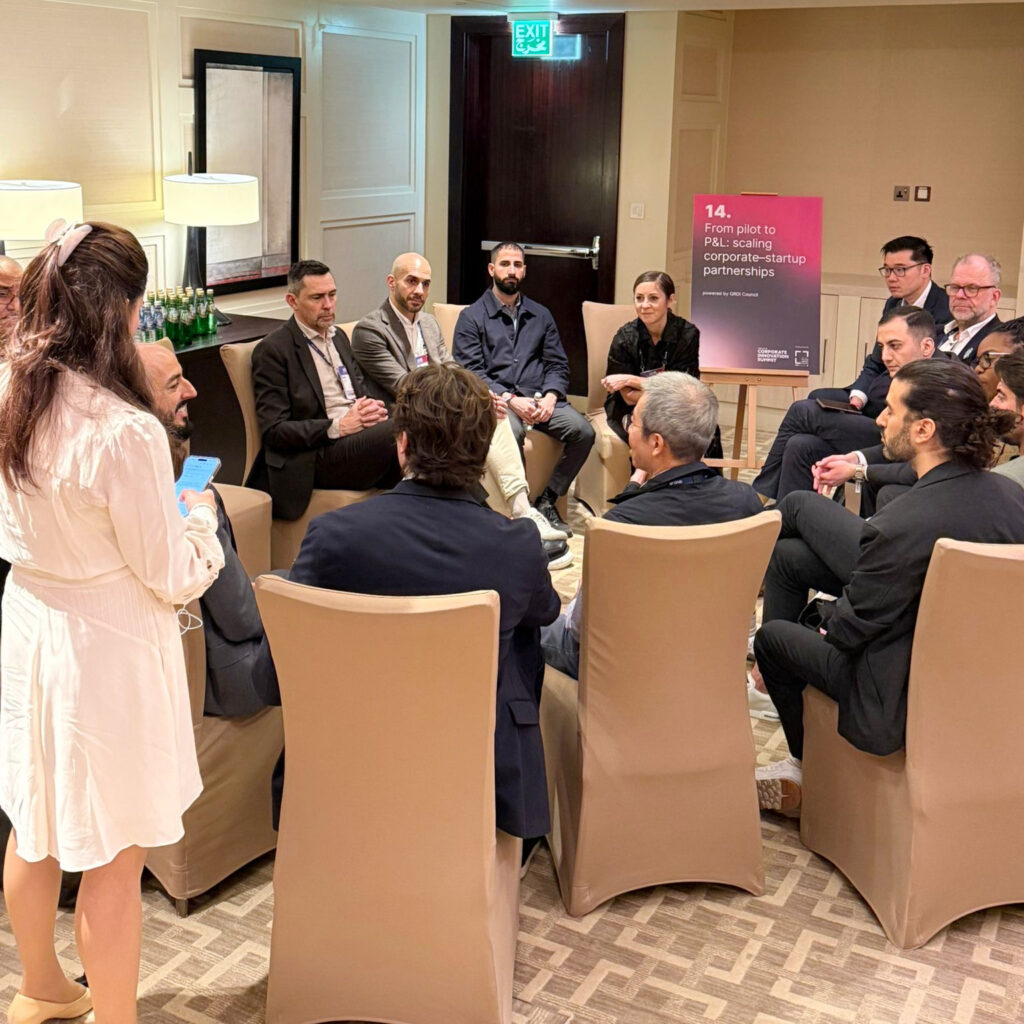
Throughout the week, the delegation participated in a Corporate Innovation Summit, high-level meetings, roundtables with the Qatar Research, Development and Innovation Council (QRDI), meetings with Qatari Diar, Qatar Investment Authority, Mowasalat and Qatar Foundation, as well as a dedicated Swedish Startup Pitch Session at the QRDI Pavilion during Web Summit.
Beyond the program itself, what made the strongest impression was the culture of doing business.
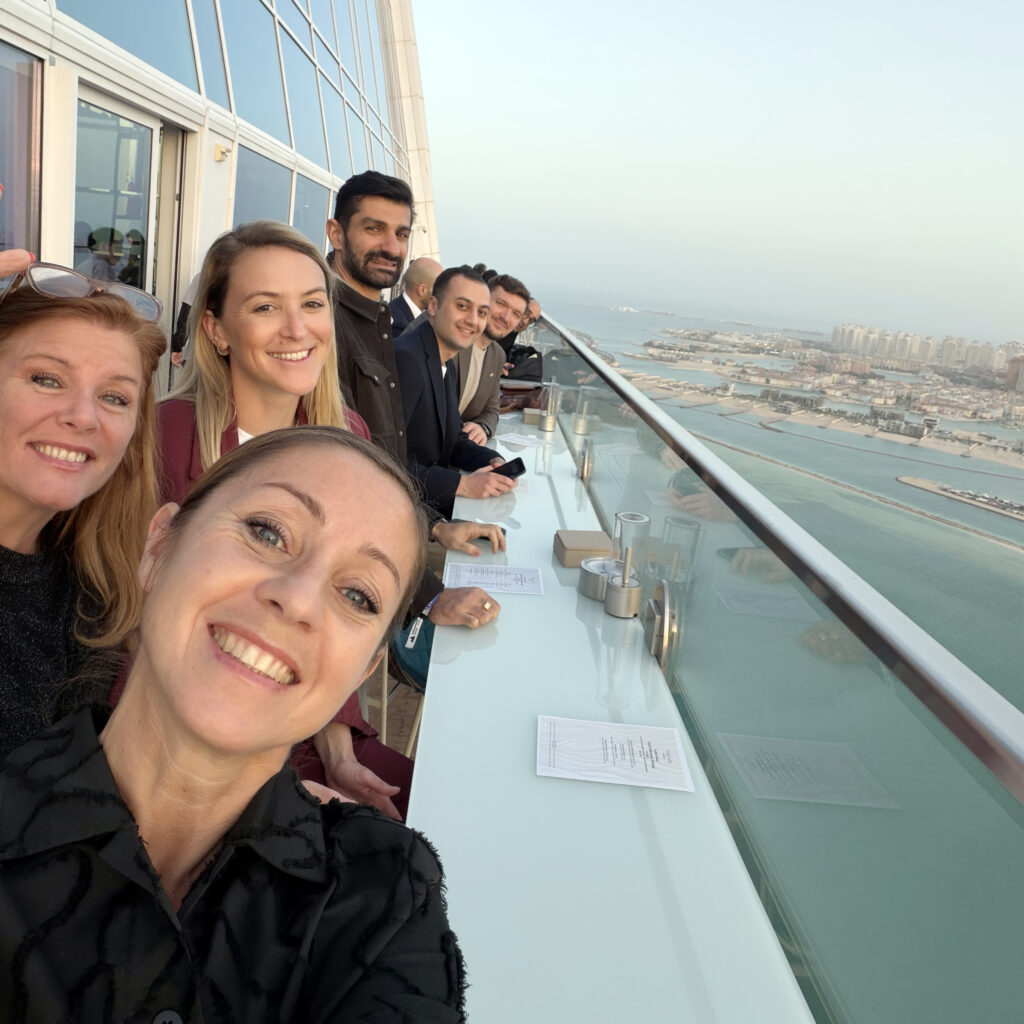
“What really stood out was the belief that to do things together, you first build relationships,” Maria reflected. “You sit down for coffee, look each other in the eye, take the time to listen. There is a true walk-in culture — you don’t always need a booked meeting to start a meaningful conversation.”
That relational approach resonated strongly with the startups. Karin Ebbinghaus, CEO of the sustainable transport scaleup Elonroad, shared a very positive impression of both the people and the country.“There is a clear vision here to not stagnate or remain dependent on oil and gas, but to build a more diversified innovation and technology ecosystem. It’s impressive to see,” she said. “The people have been incredibly generous in welcoming us and sharing their networks. The pace of work is different from what we are used to in Scandinavia — less stress, greater focus on relationships. Here, you do business with people you genuinely like.”
From Flowity, the experience was equally positive. Syed Sohail Abbass described Web Summit Qatar as “the perfect hub for meeting innovators and industry leaders,” emphasizing the hospitality, openness, and genuine friendliness encountered during the week.
From Presence to Practical Collaboration
Beyond networking, the delegation engaged in practical, sector-specific discussions around urban development, infrastructure, mobility, AI and health innovation, areas where Swedish expertise clearly matches Qatari priorities.
Maria emphasized the value of meeting decision-makers in person in Doha.
“In one room, with top executives from a very large organization, the match between their needs and the startups’ solutions was so clear that it was hard not to get excited. I truly believe — and hope — that several collaborations will come out of this.”
Martin Blaszczyk, Head of Sales & Partnerships at Flasheye, highlighted the structured support available for companies looking to establish locally.“We have seen how the country is really investing in innovation, with strong setups for startups that want to establish themselves, develop and carry out pilot projects. Hopefully we are back in a year with a completed pilot project together with a local partner and the next step in our expansion in the region.”

Key Takeaways From The Delegation
- Relationships drive business in Qatar. Long-term presence and trust-building are essential. Showing up consistently matters.
- Alignment in priority areas. Sustainability, mobility, AI, healthtech and research-driven innovation are shared focus areas.
- Strong institutional backing. Qatar is building real structures —from QRDI funding to the Qatar Investment Authority (QIA) Fund of Funds program— to attract and scale innovation.
- Growing maturity in dialogue. Compared to previous years, discussions are now more concrete and operational.
- Clear market relevance for Swedish deeptech. The solutions presented matched real needs among corporates and public organizations.
- A gateway to the MENA region. Qatar offers not only a domestic market but a strategic entry point to the wider region.
Acknowledgements
This initiative would not have been possible without the support of H.E. Gautam S. Bhattacharyya and Mia Månsbacka from the Embassy of Sweden in Qatar, as well as the QRDI team, including Hind Zaki and Malik Habayeb.
The fifth edition of Healthtech Matchday gathered startups, corporates, and public organizations in Gothenburg for a full day focused on collaboration within healthcare and life science.
Hosted at Sahlgrenska Science Park, the event welcomed more than 55 participants and enabled over 45 curated meetings, connecting 39 startups with 8 established organizations and creating space for concrete discussions around commercial collaboration opportunities.
Participating organizations included AstraZeneca, Cambio, IBM, L’Oréal, Mölnlycke Health Care, Novartis, and the municipalities of Umeå and Uppsala — all engaging with startups to explore collaboration potential.
Matchmaking That Creates Momentum
For startup participants, the in-person format played a key role in building trust and momentum.
Aperya, which develops a patent-pending microsphere ingredient that boosts key-ingredient absorption by 100x, was one of the startups taking part in Healthtech Matchday. Co-founder Niclas Roxhed highlighted the value of deeper conversations made possible by meeting in person.
“I think meeting potential customers in person is fundamental to establishing a relationship with them. I wouldn’t have been able to have that kind of meeting online and get all the nitty-gritty details. I also got insights I hadn’t thought about and that we can work on to approach the customer or stakeholder more easily. It was a really good meeting, so it was definitely worth coming here to Gothenburg to have it.”
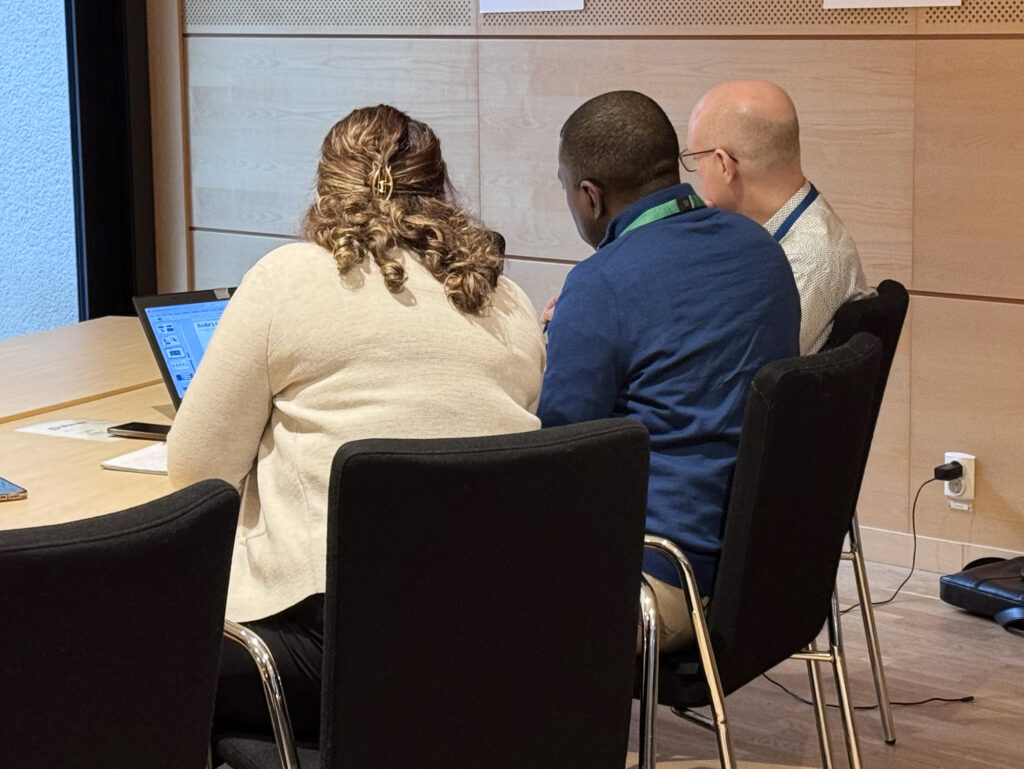
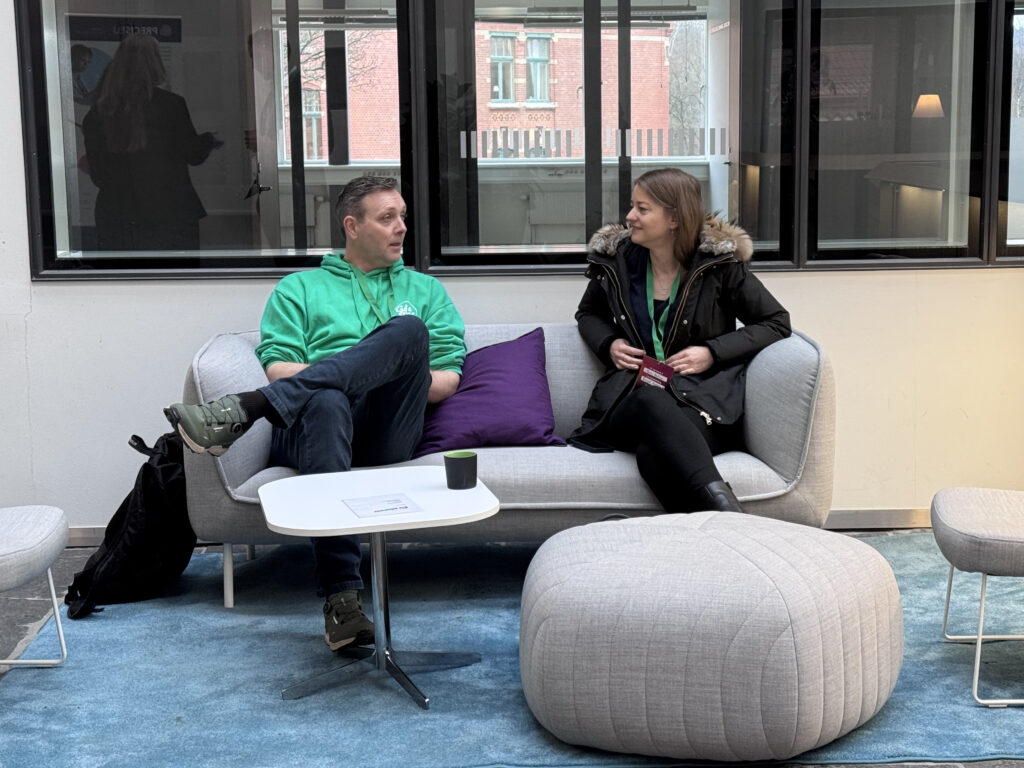
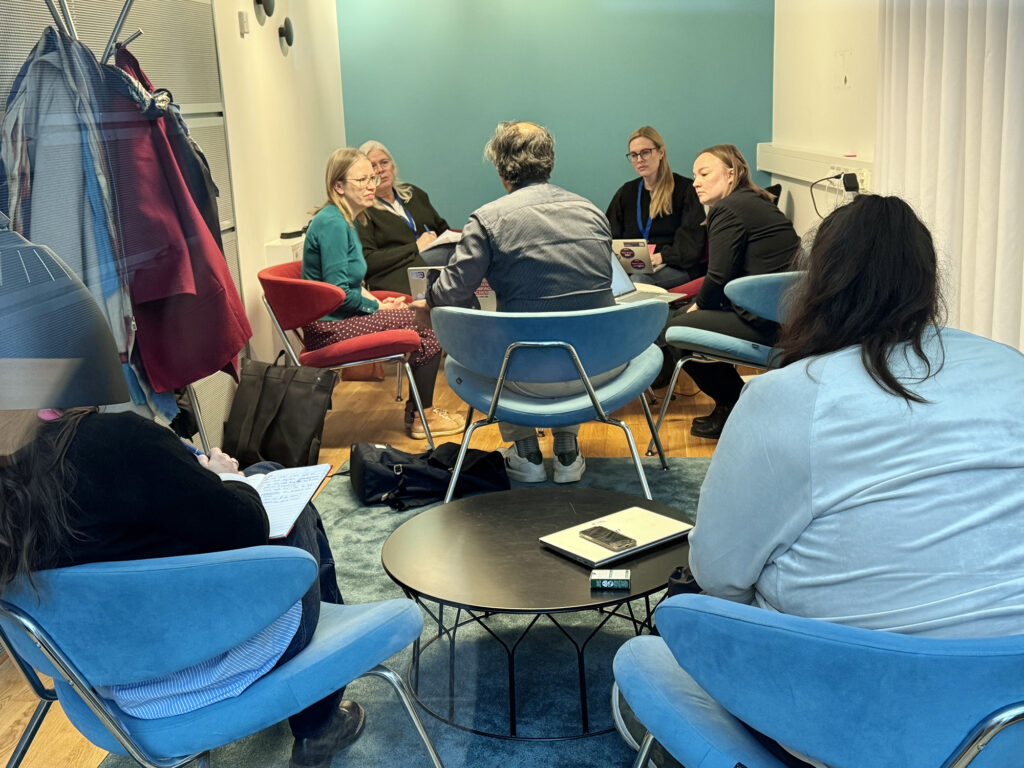
The importance of face-to-face meetings was echoed by Ebenezer Twumasi Afriyie, CEO of Xcida, which develops nanocomposites for biocide-free antimicrobial applications.
“I think physical meetings are much better than digital ones because you can read people’s body language and tell whether they’re interested or not.”
Beyond meetings with established organizations, the matchmaking also created unexpected connections between startups themselves.
“I met different startups. It’s quite good to learn about their solutions and to see how things are going for them. I talked, for example, to one startup about what they are doing. Even if it’s not close to what we are doing, who knows, there could be a little bit of synergy in the future,” says Ebenezer.
A Shared Reflection on the Future of Healthcare Innovation
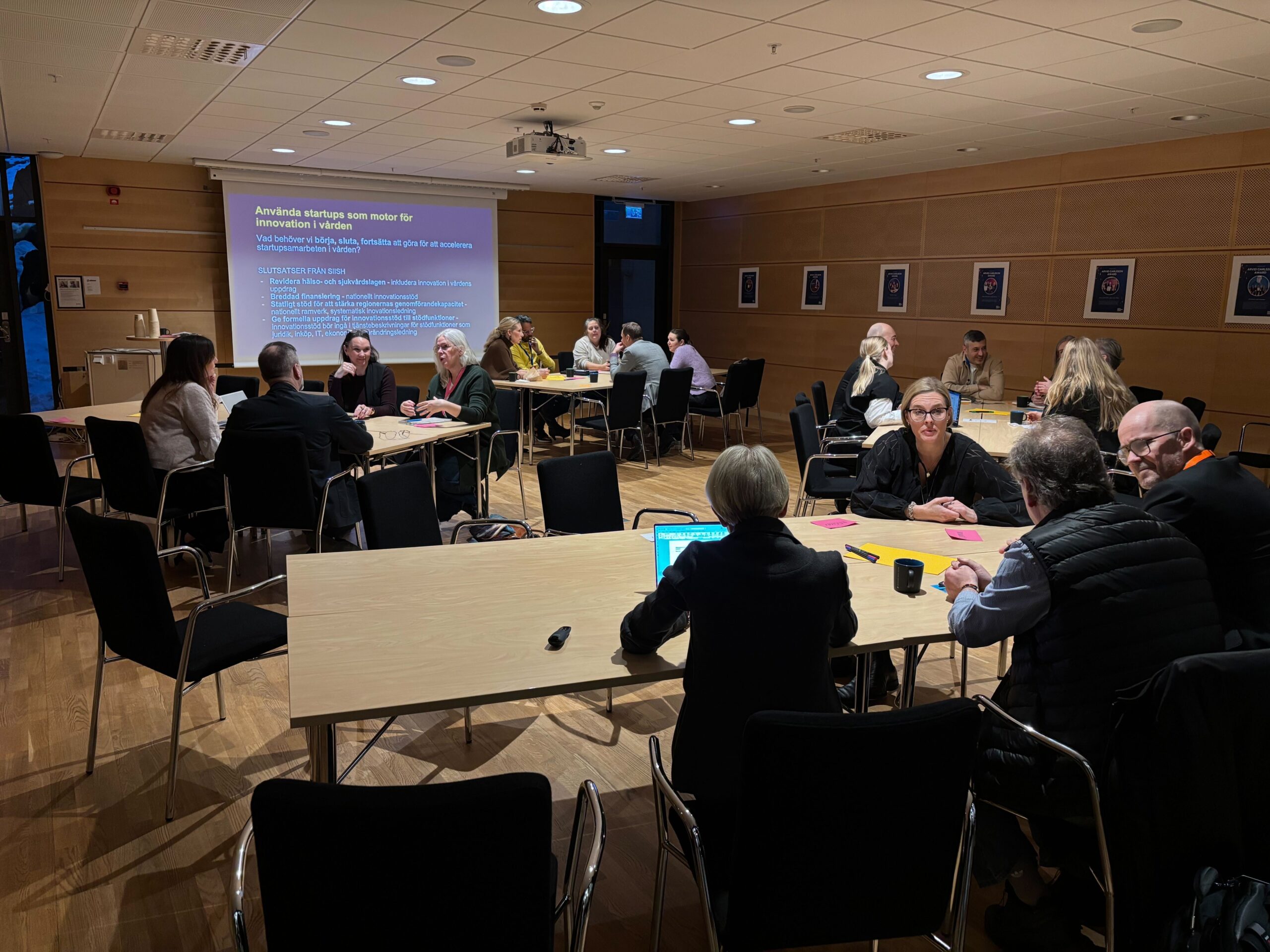
Ahead of the matchmaking, a round table discussion brought together actors from across the ecosystem — from public organizations and corporates to incubators and science parks — to reflect on how healthcare innovation can move faster and further.
The conversation focused on the importance of leadership and on creating the right conditions for collaboration with startups to succeed at scale, built on the conclusions of the innovation project SIISH (Snabbare implementering av innovationer i svensk hälso- och sjukvård) as a starting point.
Rather than treating innovation as isolated pilots, participants emphasized the need for long-term commitment, clear ownership, and collaboration across organizational boundaries.
Key insights from the discussion:
- Innovation must be formalized as part of healthcare’s mission, supported by mandate and delivery capacity.
- Support functions need clear innovation responsibilities to avoid slow, uncertain, person-dependent processes.
- Healthcare must define needs, target impact, and post-pilot ownership to move faster toward implementation.
- Culture and risk aversion remain barriers — leadership must build courage and pride in implementation.
- Inclusive language and cross-sector collaboration enable stronger impact, especially around real-life care flows.